
Best Pickleball Paddles of 2026: Ranked & Reviewed
We turn swing weight, twist weight, spin and core build into plain-English picks — so you can find the best pickleball paddle for your level and budget in minutes.
By the Editorial Team · Updated · Reader-supported: we may earn a commission. As an Amazon Associate we earn from qualifying purchases.
The best pickleball paddle for most players in 2026 is the Six Zero Coral 16mm — a forgiving foam-core all-court paddle at about $200. Advanced power players should get the JOOLA Perseus Pro IV. On a budget, the Vatic Pro V-Sol Tour Flash (~$110) is the best value, and true beginners should start with the Onix Z5 Graphite.
Looking for the best pickleball paddles of 2026? We reviewed the 2026 picks and lab data of the leading US testers — more than 40 paddles in total — and narrowed the list to 10. Every pick here is a current 2026 model, sold in the USA, and approved for sanctioned play. We ranked them on power, control, spin, forgiveness and value using independent lab measurements — swing weight, twist weight and spin RPM — plus manufacturer specs and owner feedback.
New to the numbers? Swing weight tells you how heavy a paddle feels in motion. Twist weight tells you how stable it stays on off-center hits. Higher twist weight means a bigger, more forgiving sweet spot. Our paddle buying guide explains each spec in plain English.
Best pickleball paddles at a glance
| Paddle | Best for | Shape | Weight | Swing wt | Twist wt | Core | Price range | Buy |
|---|---|---|---|---|---|---|---|---|
| JOOLA Perseus Pro IV | Best Overall for Power Players | Elongated | 8.1 oz | 116.5 | 6.4 | Thermoformed polymer honeycomb + foam walls | $200–$250 | At JOOLA |
| Six Zero Coral | Best Foam Core All-Court | Hybrid | 8.0–8.3 oz | 114 | 6.7 | Gen 4 foam | $200–$250 | Check price |
| Vatic Pro V-Sol Tour Flash | Best Value Under $110 | Hybrid | 8.0 oz | 112 | 6.57 | Gen 4 floating EPP foam | $100–$150 | Check price |
| 11SIX24 Ultré Power 2 | Best for Spin | Hybrid | 8.06 oz | 114 | 6.69 | Gen 4 foam | $200–$250 | Check price |
| Six Zero Double Black Diamond | Best for Control | Hybrid | 8.1 oz | 114 | 6.8 | Raw carbon + honeycomb | $150–$200 | Check price |
| Selkirk Boomstik | Best for Power | Elongated | 8.0–8.4 oz | 121 | 6.92 | Gen 4 foam (BoomCore) | $250+ | At Selkirk |
| Paddletek Tempest Veyra | Most Forgiving (Arm-Friendly) | Elongated or Widebody | 7.6–8.0 oz | 113 | 6.0 | Gen 4 EPP foam + damping rods | $150–$200 | At Paddletek |
| Friday Aura Pro | Best All-Court Value | Hybrid | 8.0 oz | 116 | 6.43 | Gen 4 dual-density foam | $150–$200 | Check price |
| Vatic Pro PRISM Flash | Best Budget Control Paddle | Hybrid | 7.8–8.2 oz | — | — | Raw carbon + polymer honeycomb | Under $100 | Check price |
| Onix Z5 Graphite | Best for True Beginners | Widebody | 7.5–8.2 oz | — | — | Graphite + Nomex | Under $100 | Check price |
Swing and twist weights are lab measurements where available (sources listed in the specs database); “—” means no trusted independent figure yet. Price ranges are approximate — tap “Check price” for today’s Amazon price.
1. JOOLA Perseus Pro IV — best overall for power players
 Best Overall for Power Players
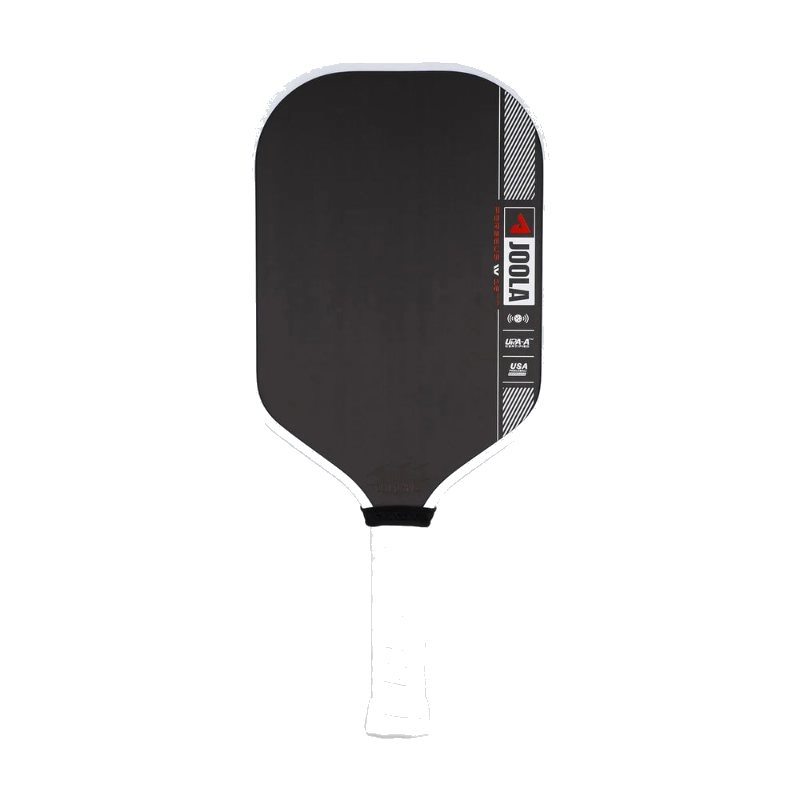
JOOLA Ben Johns Perseus Pro IV 16mm
Why we picked it
The Perseus Pro IV is Ben Johns’ former signature paddle and one of the most explosive paddles you can buy. JOOLA kept the Propulsion core from the Perseus 3S and added Tech Flex Power, a denser foam in the throat. The result is the same big power with a smoother, more dampened feel.
How it plays
Independent lab testing measured a 116.5 swing weight, 6.4 twist weight and 2,236 rpm on the 16mm model. That is a moderate swing weight for an elongated paddle, so it is easier to accelerate than the old 3S (121). Drives and serves come off hot. Counters and speed-ups have real pop. The trade-off is control: if your soft game is still developing, dinks can sail.
How it compares
Against the newer Pro V, lab data shows nearly identical static weight, twist weight and drive speed, but the Pro V swings about 4 points heavier and spins slightly more. Now that the Pro IV sells for about $250 versus ~$300, it is the smarter buy for most power players. Read our full JOOLA Perseus Pro IV review.
Pros
- Elite drive and serve speed
- Big pop on speed-ups and counters
- More maneuverable than the Perseus 3S
- Dual USAP + UPA-A approval
Cons
- Hard to control for newer players
- Short 6-month warranty
- Spin is good, not class-leading
2. Six Zero Coral 16mm — best foam-core all-court paddle
 Best Foam Core All-Court
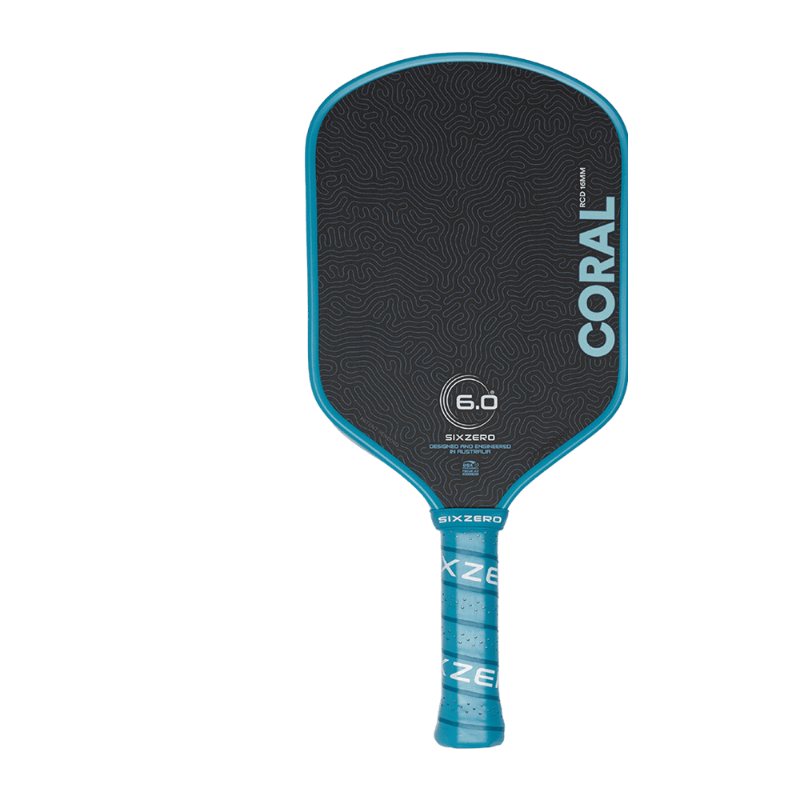
Six Zero Coral 16mm Hybrid
Why we picked it
Six Zero bills the Coral as its 2025 All-Court Paddle of the Year, and it is still the paddle we recommend first to most intermediate players. It pairs a Tectonic suspension core with ProPulsion foam and a Diamond Tough raw carbon face that keeps its texture longer than plain raw carbon.
How it plays
Six Zero lists a 114 swing weight and 6.70 twist weight, and independent lab data puts spin at about 2,187 rpm. In plain terms: quick enough for hand battles, stable on off-center blocks, and plush on resets. It has more pop than a classic control paddle without the jumpy feel of a power paddle.
How it compares
It is softer than the 11SIX24 Ultré and more forgiving than the Perseus Pro IV. The stock grip is small (4.0–4.13 in), so add an overgrip if you have large hands. Want the same paddle with more spin? Look at the Coral Pro (about $220).
Pros
- Plush feel with real put-away power
- Reinforced throat boosts stability
- Diamond Tough grit lasts longer than plain raw carbon
Cons
- Small stock grip for big hands
- Not the fastest paddle in hand battles
3. Vatic Pro V-Sol Tour Flash — best value under $110
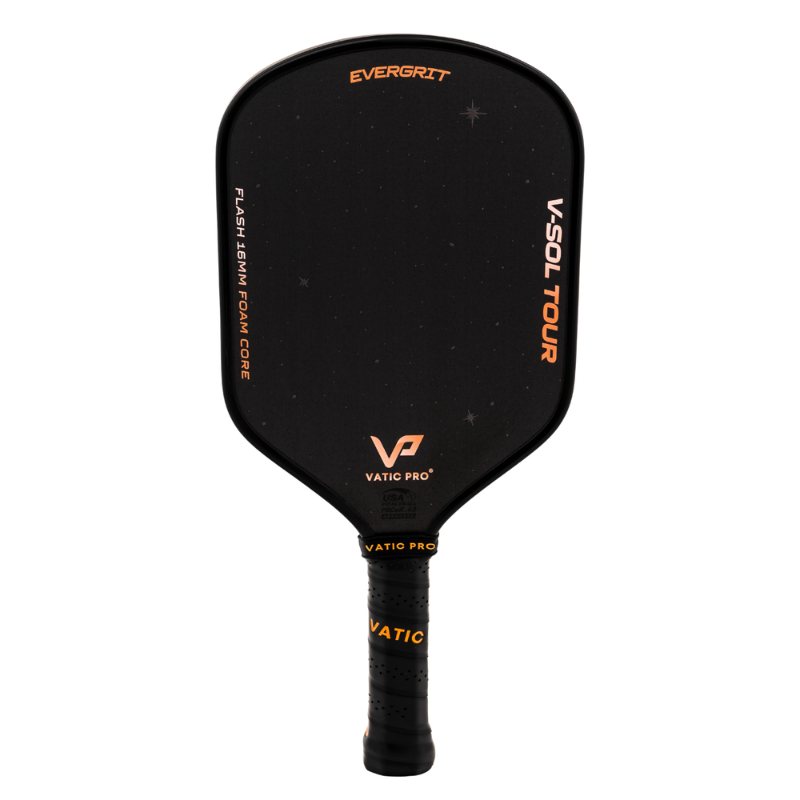 Best Value Under $110
Vatic Pro V-Sol Tour Flash 16mm
Why we picked it
This is the paddle that broke the “$250 for real power” rule. The V-Sol Tour updates Vatic Pro’s Gen 4 floating-foam V-Sol Pro with EverGrit, a new durable grit surface, at ~$110.
How it plays
Independent lab testing measured 8.0 oz, 112 swing weight, 6.57 twist weight and 2,128 rpm — right on the hybrid averages. So it swings the way you expect a hybrid to swing, with quick pop on speed-ups and counters. The feel is stiff and dense rather than plush.
How it compares
Next to $200+ foam paddles it gives up some refinement and stock stability, but not much performance. Add a little lead tape at 3 and 9 o’clock if you want a bigger sweet spot. For the price, nothing else on this list comes close.
Pros
- Foam-core power at about half the usual price
- Durable grit holds spin longer
- Average swing weight feels quick
Cons
- Stiff, firm feel at impact
- Stock twist weight is only average
- Fewer pro-level fit-and-finish touches
4. 11SIX24 Ultré Power 2 — best for spin
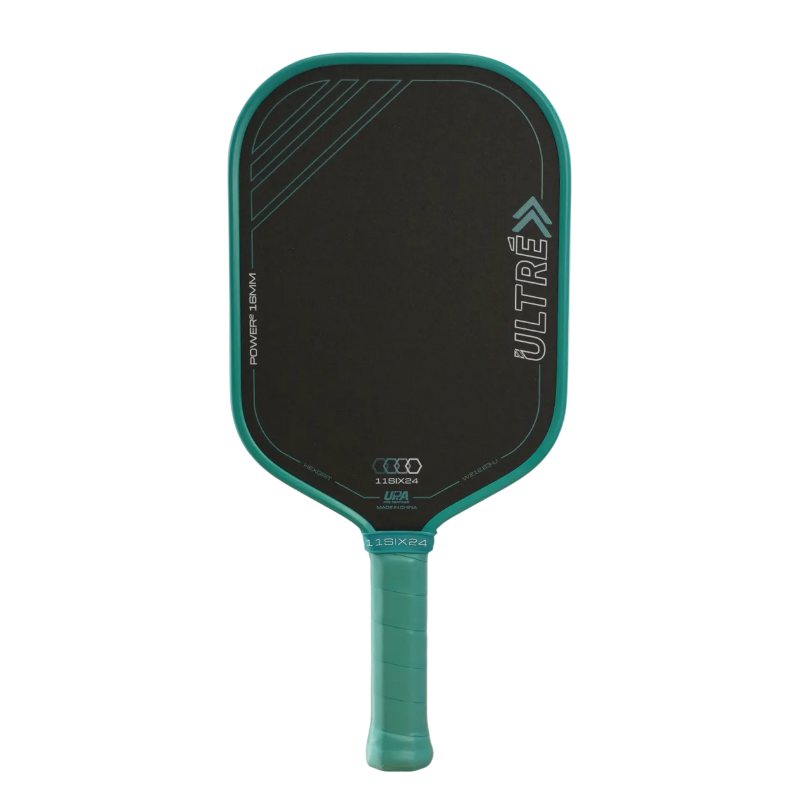 Best for Spin
11SIX24 Ultré Power 2 16mm
Why we picked it
The Power 2 series uses 11SIX24’s HexGrit surface, which lab testers rate among the grittiest and most durable surfaces on the market. The Ultré is the most offensive hybrid in the line.
How it plays
Lab numbers: 8.06 oz, 114 swing weight, 6.69 twist weight, 2,130 rpm. A separate camera-based test put it at 2,381 rpm, near the top of all paddles tested. Expect heavy topspin drives, kicking serves and dipping rolls, with a stable face on blocks.
How it compares
It is approved by UPA-A (the pro tours’ certification). If you play USA Pickleball-sanctioned tournaments, check the USA Pickleball approved list first. For rec and league play, it is one of the best spin paddles in 2026.
Pros
- Very high, long-lasting spin from HexGrit
- Strong power with stable twist weight
- Hybrid shape balances reach and forgiveness
Cons
- UPA-A only — check your league if you play USAP events
- Firm feel will not suit pure touch players
5. Six Zero Double Black Diamond Control — best for control
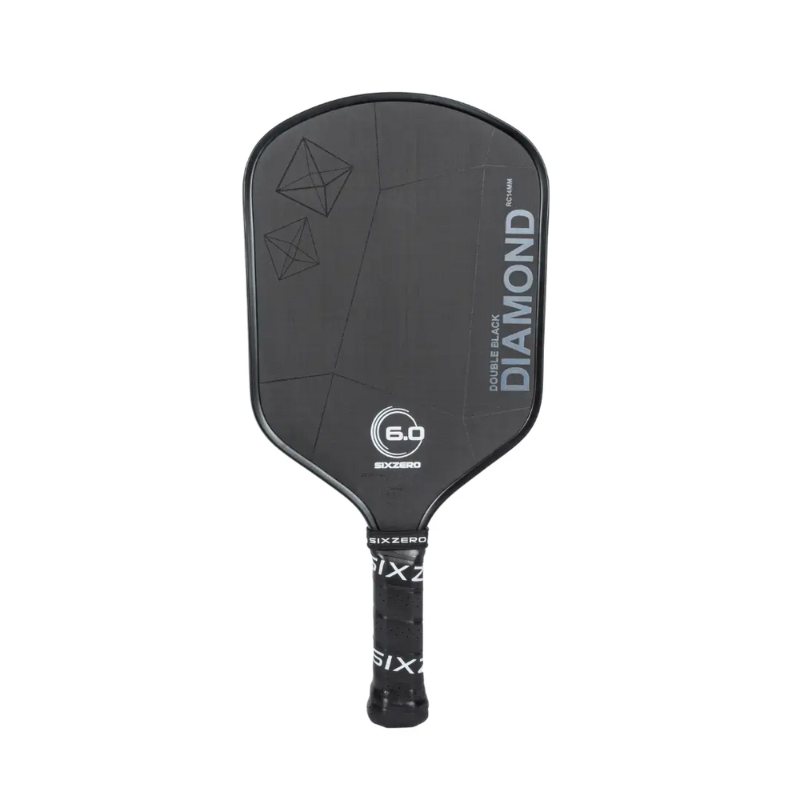 Best for Control
Six Zero Double Black Diamond Control 16mm
Why we picked it
The Double Black Diamond (DBD) was Six Zero’s paddle of the year in 2023 and remains a benchmark control paddle. It uses a 16mm polypropylene honeycomb core and a Toray T700 raw carbon face.
How it plays
Six Zero lists a 114 swing weight and 6.8 twist weight. That high twist weight is why the DBD feels so calm on blocks and resets. The ball stays on the face a touch longer, which makes drops and dinks easier to place. Power is moderate: you can drive, but the paddle will not add free pace.
How it compares
It is more predictable than any foam paddle on this list, but foam paddles now offer more pop for the same control. Pick the DBD if your game is built on the kitchen line.
Pros
- Calm, predictable feel on dinks and resets
- Very consistent response edge to edge
- Proven design with a big fan base
Cons
- Lower top-end power than foam paddles
- Raw carbon grit wears faster than infused grit
6. Selkirk LABS Project Boomstik — best for power
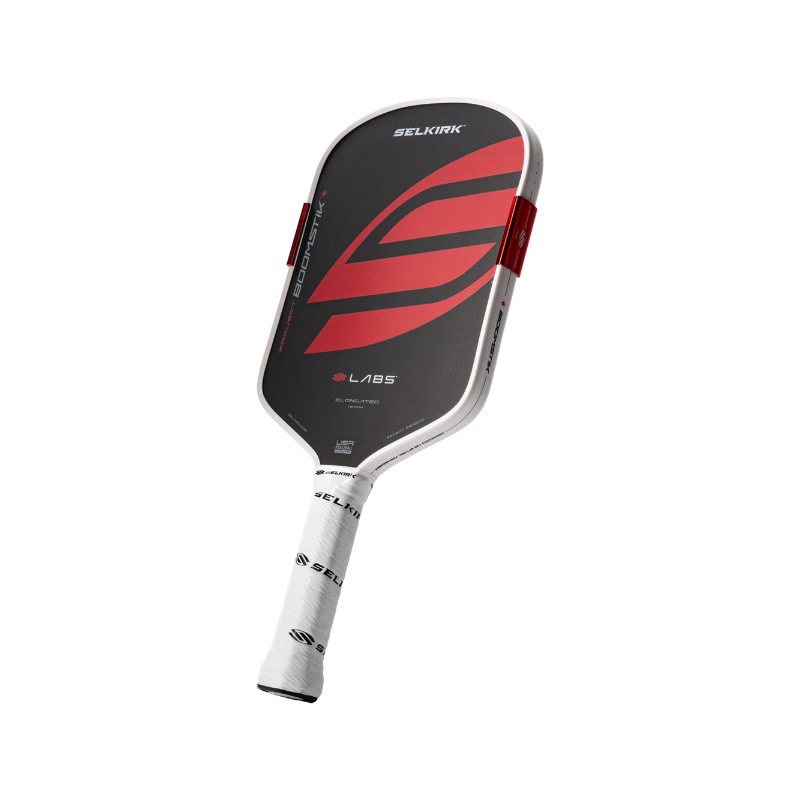 Best for Power
Selkirk LABS Project Boomstik Elongated 16mm
Why we picked it
The Boomstik was one of the first truly successful foam-core power paddles. Its BoomCore combines PureFoam with an EVA Power Ring, and Selkirk claims 14% more ball exit speed than its SLK ERA Power. It ships with a limited lifetime warranty — rare for a power paddle.
How it plays
Independent lab testing measured the elongated model at 121 swing weight and 6.92 twist weight — an excellent twist weight for an elongated shape. That mass is where the plow-through comes from. The cost is slower hands at the net. The widebody version (113 swing weight, 7.72 twist weight) is the more forgiving option.
How it compares
It hits heavier than the Perseus Pro IV, but the JOOLA is quicker in fast exchanges. At $333 list it is the priciest pick here; it is often discounted to $250–$300.
Pros
- Huge plow-through power on drives and serves
- Excellent twist weight for an elongated paddle
- Limited lifetime warranty
Cons
- Expensive at $333 list
- Heavy swing weight slows hand battles
7. Paddletek Tempest Veyra — most forgiving and arm-friendly
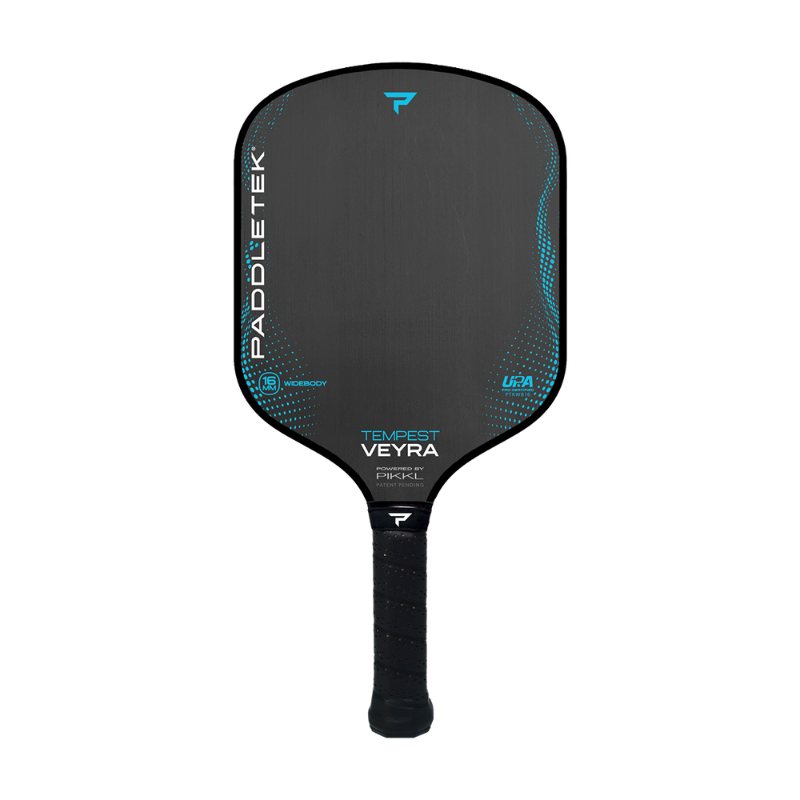 Most Forgiving (Arm-Friendly)
Paddletek Tempest Veyra 16mm (Elongated / Widebody)
Why we picked it
Tempest is Paddletek’s control line, and the Veyra pushes it further. It uses a 16mm EPP foam core plus two patent-pending damping rods (steel wire with an elastomer coating) to cut vibration. Several reviewers rank it among the best control paddles of 2026.
How it plays
Paddletek lists the elongated at a 113 swing weight and 6.0 twist weight, and the widebody at 108 and 6.85. The widebody is one of the quickest, most forgiving paddles you can buy. Resets feel muted and easy. If you have tennis elbow, this is the first paddle we would try.
How it compares
It is softer and calmer than the DBD Control, with less pop. Power players should look elsewhere.
Pros
- Damping rods cut vibration for sore arms
- Extra-large, forgiving sweet spot
- Widebody version is very quick (108 swing weight)
Cons
- Modest top-end power
- Light stock weight may need lead tape for stability
8. Friday Aura Pro — best all-court value
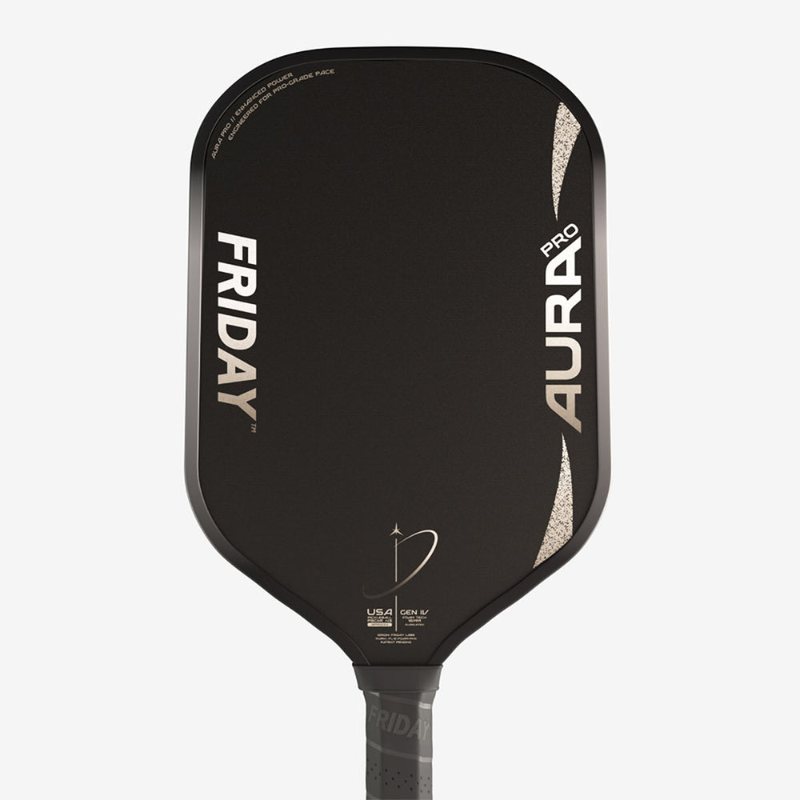 Best All-Court Value
Friday Aura Pro Hybrid 16mm
Why we picked it
Friday grew from viral videos into a serious paddle brand, and the Aura Pro (released April 2026) is its best paddle yet. Testers describe it as a foam paddle with a polymer-like, poppy feel.
How it plays
On the hybrid, lab testing measured 8.0 oz, 116 swing weight and 6.43 twist weight. The elongated (6.02 twist weight) is the most maneuverable; the widebody (108 swing weight, 6.86 twist weight) is the most forgiving.
How it compares
It gives most of the feel of $200+ Gen 4 paddles for about $169. The 6-month warranty is the main drawback.
Pros
- Polymer-like pop from a foam core
- Three shapes (elongated, hybrid, widebody)
- Priced below most Gen 4 rivals
Cons
- 6-month warranty
- Hybrid's stock twist weight is only average
9. Vatic Pro PRISM Flash — best budget control paddle
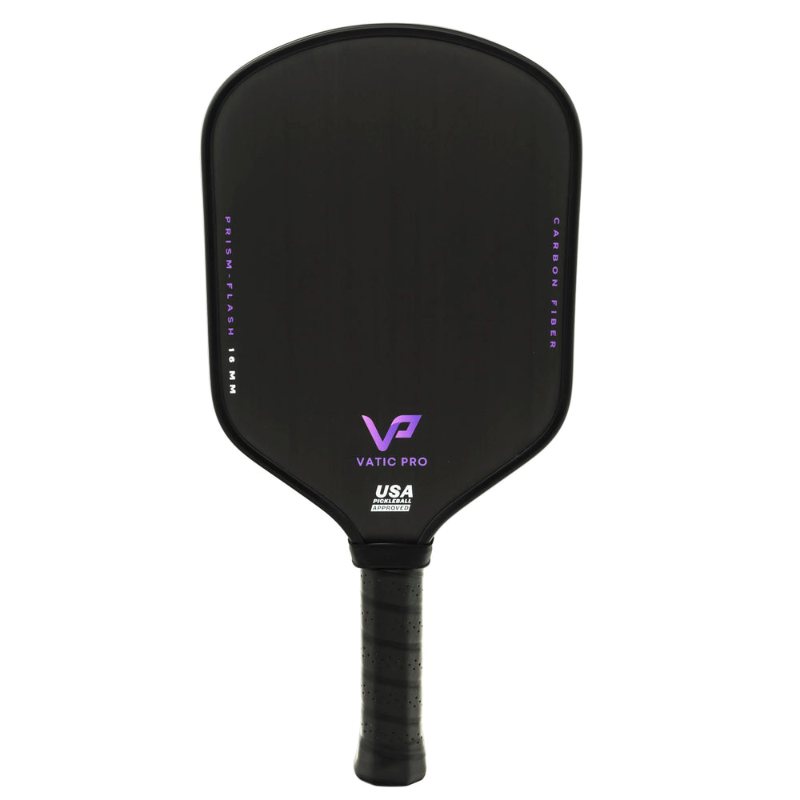 Best Budget Control Paddle
Vatic Pro PRISM Flash 16mm
Why we picked it
The PRISM Flash proved that a $100 paddle could use the same Toray T700 raw carbon as premium paddles. Its 16mm polymer honeycomb core with foam-injected walls gives a plush, forgiving feel.
How it plays
This is a control-first paddle. It helps your dinks, drops and resets and gives you good spin, but you supply the power. In lab ratings it scores near the top for control and near the bottom for power.
How it compares
It is the best first carbon fiber paddle for most beginners moving up from a fiberglass set. For more pop at the same price, step up to the V-Sol Tour.
Pros
- Raw carbon spin and touch under $100
- Plush, soft feel for resets
- Comfortable octagonal handle
Cons
- Low power — you supply the pace
- Only one thickness (16mm)
10. Onix Z5 Graphite — best for true beginners
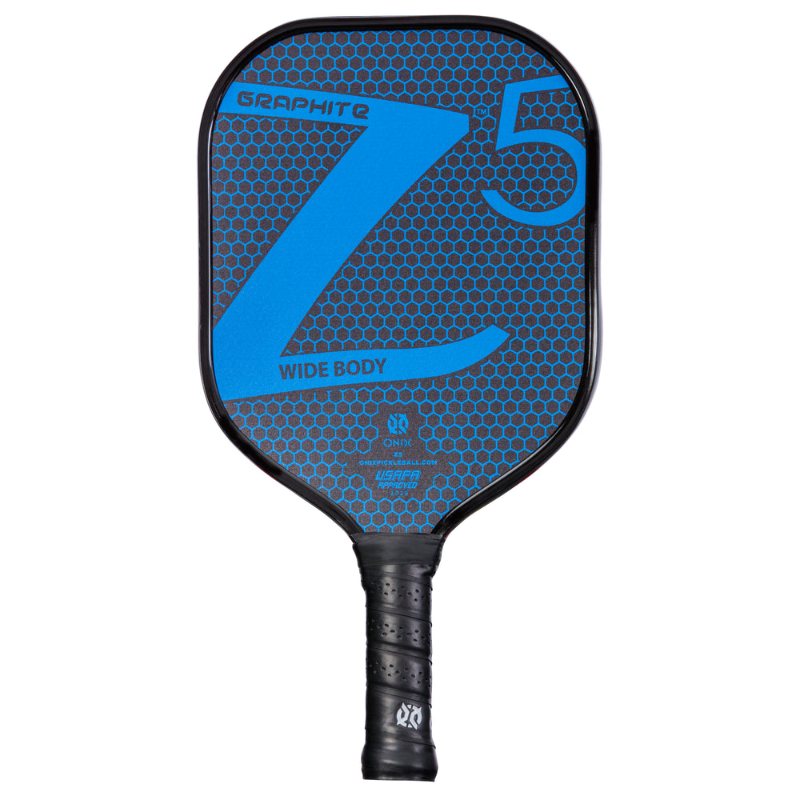 Best for True Beginners
Onix Z5 Graphite Widebody
Why we picked it
The Z5 is the most popular paddle Onix has ever made, and it is still a smart first paddle. The widebody shape (15.5 × 8.125 in) gives a huge sweet spot, and the Nomex honeycomb core is easy to control.
How it plays
It is light (7.5–8.2 oz) and simple to swing. The smooth graphite face makes little spin, and the 5-inch handle is too short for two-handed backhands. For learning the game, those are fair trade-offs.
How it compares
Once you play 2–3 times a week, upgrade to the PRISM Flash or V-Sol Tour. Both add real spin and modern feel for about the same money.
Pros
- Huge widebody sweet spot
- Light, easy to swing
- Sold almost everywhere, often on sale
Cons
- Little spin from the smooth graphite face
- Short 5-inch handle — no two-handed backhands
- Loud, older-style Nomex sound
Best pickleball paddle by player type and budget
Use this table if you already know what you need. Each pick links to its full write-up above.
| If you are… | Our pick | Why |
|---|---|---|
| A true beginner | Onix Z5 Graphite | Huge widebody sweet spot, light, easy to control. See all best beginner paddles. |
| A beginner ready to upgrade | Vatic Pro PRISM Flash | Raw carbon spin and touch under $100. |
| An intermediate (3.0–4.0) | Six Zero Coral | Soft, stable, and powerful enough to finish. See our intermediate guide. |
| An advanced player (4.0+) | JOOLA Perseus Pro IV | Elite power and pop for players who control pace. |
| A former tennis player | Selkirk Boomstik | Elongated reach, long 5.8 in handle, big plow-through. |
| Dealing with tennis elbow | Paddletek Tempest Veyra | Damping rods and a soft EPP foam core reduce vibration. |
| A woman or player with smaller hands | Six Zero Coral / Tempest Veyra Widebody | Paddles are not gender-specific. Choose a 4.0–4.125 in grip and a quick swing weight (108–114). |
| A senior player | Tempest Veyra Widebody | Low 108 swing weight and high 6.85 twist weight: easy and forgiving. |
| Looking for spin | 11SIX24 Ultré Power 2 | Durable HexGrit with top-tier spin readings. |
| Looking for power | Selkirk Boomstik | Highest plow-through on this list. |
| Looking for control | Six Zero Double Black Diamond | Calm, predictable response on dinks and resets. |
| Shopping under $100 | PRISM Flash / Onix Z5 | Best control and best beginner value. |
| Shopping under $150 | Vatic Pro V-Sol Tour Flash | Gen 4 foam power for ~$110. |
| Shopping under $200 | DBD, Tempest Veyra, Aura Pro | Premium feel without the $250+ price. |
How to choose the best pickleball paddle for you
Ignore brand hype. Five things decide how a paddle plays. Here is the short version; our complete buying guide goes deeper.
1. Power, control or all-court?
Power paddles add pace on drives and serves but are harder to control. Control paddles keep dinks and resets low but make you supply the speed. All-court paddles sit in the middle and suit most players. If you are unsure, start all-court.
2. Core thickness: 14mm vs 16mm
A 16mm core softens the ball, adds control and widens the sweet spot. A 14mm core feels crisper, with more pop and faster hands. Most players should start at 16mm.
3. Shape: widebody, hybrid or elongated
- Widebody (≈16 × 8 in): biggest sweet spot, quickest at the net, best for beginners.
- Hybrid (≈16.3 × 7.7 in): a balance of reach and forgiveness. The best default.
- Elongated (≈16.5 × 7.5 in): more reach and power, smaller sweet spot. Great for ex-tennis players and singles.
4. Weight and swing weight
Most good paddles weigh 7.8–8.4 oz. Static weight matters less than swing weight: under ~110 feels quick, 112–118 is average, and 120+ feels heavy but powerful. Check our paddle specs database to compare.
5. Grip size and handle length
Most adults fit a 4.125–4.25 in grip. If between sizes, go smaller and add an overgrip. Choose a handle of 5.5 in or longer if you hit two-handed backhands.
6. Face material and grit
Raw carbon fiber (T700) is the 2026 standard for spin and touch. Infused or textured grits like HexGrit, EverGrit and Diamond Tough last longer than plain raw carbon. Fiberglass adds pop but less spin; graphite is light but smooth. Read what the best pickleball paddle material is.
7. Tournament approval
For USA Pickleball-sanctioned events, your paddle must be on the USA Pickleball approved list (USAP). Pro tour events run under the UPA use UPA-A approval. Many paddles here carry both.
What changed in 2026: foam cores went mainstream
For years the best paddles used thermoformed polymer honeycomb cores. They were powerful, but many suffered “core crush” — the core broke down and the paddle got jumpy after months of play. Gen 4 foam cores (EPP and EVA foams) fixed much of that. They keep their feel longer, add pop without a harsh feel, and are now affordable.
That shift is why a $110 foam paddle can now compete with $250 paddles. Player surveys suggest roughly half of players now use a Gen 4 foam paddle. Six of our 10 picks are foam-core.
See the exact JOOLA, Franklin, Paddletek, Selkirk and RPM paddles used by Ben Johns, Anna Bright, Hayden Patriquin and other top pros in our best pro pickleball paddles guide.
How we picked and scored these paddles
We started with the paddles that rank, sell and win in the US market in 2026. Then we:
- Collected measured data — swing weight, twist weight, spin RPM and balance — from independent paddle labs.
- Checked manufacturer specs for core, face, dimensions, handle, approval and warranty.
- Scored five traits (power, control, spin, forgiveness, value) and weighed them for each award category.
- Removed paddles with known durability or approval problems, or that are hard to buy in the US.
No brand paid for a spot. Our full method, scoring weights and update policy are on our how we test page.
Note on data: labs measure in different ways, so we only compare spin readings taken with the same test method.
Best pickleball paddles: FAQs
What is the #1 rated pickleball paddle in 2026?
What is the best all-around pickleball paddle?
What are the top 10 best pickleball paddles?
Is JOOLA or Selkirk paddle better?
What is the best type of pickleball paddle?
What brand of pickleball paddle is best?
How much should I spend on a pickleball paddle?
How long do pickleball paddles last?
Is a 14mm or 16mm pickleball paddle better?
What paddle do most pickleball pros use?
What’s the difference between a cheap and expensive pickleball paddle?

Our small independent editorial team researches paddle specs, published lab data and new releases, and writes and fact-checks every ranking, review and buying guide on this site.
Read our testing and rating method. Last updated November 19, 2026. Prices change often — tap “Check price” for today’s price.
Find the best paddle for your game
Start with how you play. Your level and style matter more than brand or price.
Intermediate players3.0–4.0 · 7 tested picks
 BeginnersForgiving, light, under $100
 Power paddlesDrives, serves, put-aways
 Control paddlesDinks, drops, resets
 Spin paddlesGrit faces that last
 Under $100Carbon fiber on a budget
 Tennis elbowArm-friendly, low vibration
 Compare all specsSortable lab-data table
How to choose a pickleball paddle in 4 steps
Four specs decide 90% of how a paddle plays. Get these right and almost any good paddle will feel great.
Pick your weight
7.8–8.2 oz suits most players. Lighter is quicker at the net; heavier adds power and stability.
Choose 14mm or 16mm
16mm = more control and a softer feel. 14mm = more pop and faster hands.
Match the shape
Widebody forgives mishits, hybrid balances, elongated adds reach and power.
Get the grip right
Most adults fit 4.125–4.25 in. Too big hurts wrist snap; too small causes squeezing.
JOOLA Perseus Pro IV: still worth it after the Pro V?
Ben Johns now uses the Pro V, and the Pro IV dropped to about $250. Lab numbers show the Pro IV still matches the Pro V on drive speed and twist weight — with a lighter swing. Here is who should buy it, and who should not.
Compare paddles side by side
Swing weight, twist weight and spin are the numbers that predict feel. We list who measured them, so you can check every figure.
| Paddle | Best for | Shape | Weight | Swing wt | Twist wt | Core | Price range | Buy |
|---|---|---|---|---|---|---|---|---|
| JOOLA Perseus Pro IV | Best Overall for Power Players | Elongated | 8.1 oz | 116.5 | 6.4 | Thermoformed polymer honeycomb + foam walls | $200–$250 | At JOOLA |
| Six Zero Coral | Best Foam Core All-Court | Hybrid | 8.0–8.3 oz | 114 | 6.7 | Gen 4 foam | $200–$250 | Check price |
| 11SIX24 Ultré Power 2 | Best for Spin | Hybrid | 8.06 oz | 114 | 6.69 | Gen 4 foam | $200–$250 | Check price |
| Selkirk Boomstik | Best for Power | Elongated | 8.0–8.4 oz | 121 | 6.92 | Gen 4 foam (BoomCore) | $250+ | At Selkirk |
| Vatic Pro V-Sol Tour Flash | Best Value Under $110 | Hybrid | 8.0 oz | 112 | 6.57 | Gen 4 floating EPP foam | $100–$150 | Check price |
No paid rankings. Every number is lab-checked.
- We cross-check specs against independent lab data and manufacturer sheets.
- We score paddles on power, control, spin, forgiveness and value — and explain the trade-offs.
- Brands cannot pay for a spot. Affiliate links never change our order.
- We update picks when a better paddle ships, and date every change.