
JOOLA Perseus Pro IV Review: Still Worth Buying in 2026?
Ben Johns’ former signature paddle is now about $250. We break down the lab data, the build and the trade-offs — and who should buy it instead of the Pro V.
Reader-supported: when you buy through our links we may earn a commission at no extra cost to you. As an Amazon Associate we earn from qualifying purchases. Learn more.
The JOOLA Perseus Pro IV is one of the best power pickleball paddles you can buy in 2026, and at about $250 it is better value than the newer Pro V. Buy it if you are a 4.0+ player who already controls pace. Skip it if you are still building your soft game — try the Six Zero Coral instead. Curious what Ben Johns plays now? See our best pro pickleball paddles guide.
Scorecard
At a glance
- Price: ~$250 (list ~$280)
- Best for: 4.0+ power and all-court players
- Shape: Elongated, 16.5 × 7.5 in
- Approval: USAP + UPA-A
What is the JOOLA Perseus Pro IV?
The Perseus Pro IV is JOOLA’s Gen 4 power paddle in the Ben Johns signature line. It launched in early 2025 as the upgrade to the Perseus 3S, and Ben Johns used it on tour until he moved to the Pro V. When the Pro V arrived, JOOLA cut the Pro IV’s price from ~$280 to about $250, and some retailers have run deeper clearance deals.
It comes in 14mm and 16mm. This review focuses on the 16mm, which most players should choose. We note where the 14mm differs.
Full specifications
| Model | JOOLA Ben Johns Perseus Pro IV 16mm (also 14mm) |
| Shape | Elongated with squared top corners |
| Length × width | 16.5 × 7.5 in |
| Static weight | 8.1 oz average (16mm); 7.9–8.0 oz (14mm) |
| Swing weight | 116.5–118 (independent lab tests) |
| Twist weight | 6.29–6.4 (independent lab tests) |
| Spin | 2,236 rpm (camera-measured lab test) |
| Core | 16mm Propulsion polypropylene honeycomb with foam-filled perimeter walls |
| Throat tech | Tech Flex Power (TFP) — denser foam in the throat |
| Face | Charged Carbon textured carbon fiber surface |
| Construction | Thermoformed, unibody |
| Handle / grip | 5.5 in handle · 4.25 in grip (16mm) · 4.125 in grip (14mm) |
| Approvals | USA Pickleball (PBCoR .43) and UPA-A |
| Warranty | 6 months (JOOLA standard) |
| Price | ~$250 (list ~$280) |
Labs measure on different rigs, so small differences between sources are normal. Compare this paddle with others in our paddle specs database.
Build, technology and quality
Propulsion core
The Pro IV keeps the Propulsion core JOOLA introduced on the 3S. It is a polypropylene honeycomb with foam injected into the perimeter walls. The foam adds weight to the edges, which raises twist weight and widens the sweet spot.
Tech Flex Power (TFP)
The big change is Tech Flex Power: a denser foam placed in the throat, separate from the edge foam. In lab testing, it improves feel and balance and reduces vibration without costing power. The edge foam wraps around the TFP foam and runs through the handle.
Charged Carbon face
The face uses JOOLA’s Charged Carbon surface, a textured carbon fiber layer. Owners note that the spin comes more from the woven texture than from added grit. Spin is good — about average for top paddles — but not class-leading.
Quality control
Earlier JOOLA Gen 3 paddles drew complaints about core crush after six to nine months. At the Pro IV launch, JOOLA said it added quality-control steps during manufacturing to reduce that risk. Reports since launch are better, but not perfect (see durability below).
How the Perseus Pro IV plays
Power
This is the Pro IV’s best trait. Lab testing measured a 60.8 mph serve speed, in line with the Pro V. Drives and serves come off fast and deep with little effort. Testers rate its power among the highest of any paddle.
Pop and hand speed
The Pro IV has a lower swing weight and balance point than the 3S, which makes it easier to whip through flicks, counters and speed-ups. Punch volleys measured 38.8 mph (16mm) and 39.6 mph (14mm), so the 14mm is the faster of the two at the net.
Control and soft game
Control is the trade-off. The 16mm can feel jumpy at first and needs some adjustment. It softens noticeably after a break-in period. Players with a solid soft game will be fine; players who struggle with resets will pop balls up.
Spin
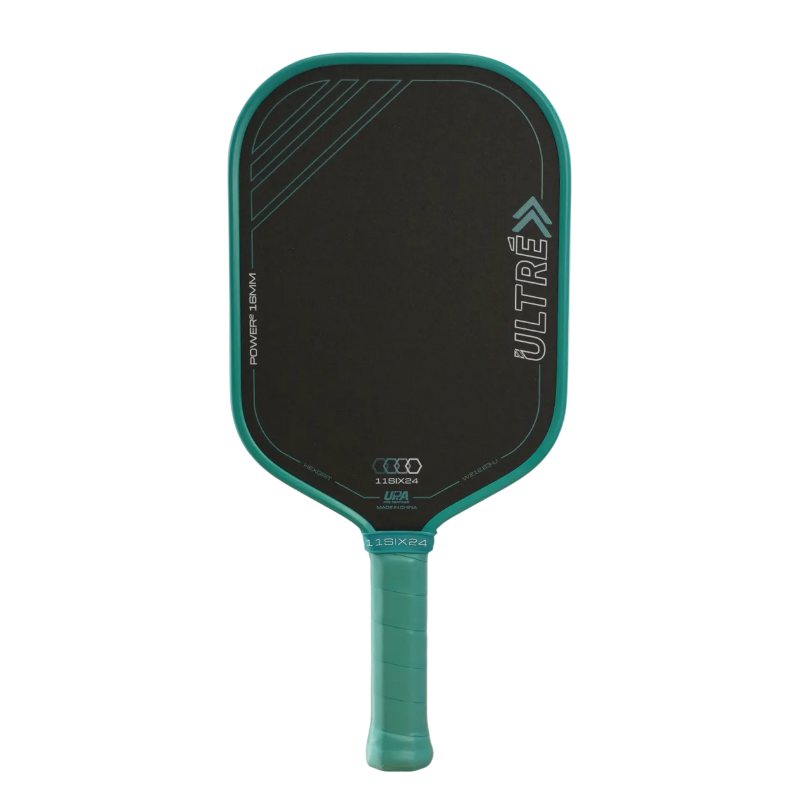
At 2,236 rpm on Matt’s camera test, spin sits around the 40th percentile of his 600+ paddle database. That is enough for heavy topspin drives and rolls, but grittier paddles like the 11SIX24 Ultré Power 2 spin more.
Forgiveness and sweet spot
A 6.3–6.4 twist weight is good for an elongated paddle. Off-center blocks stay stable. Testers rate its forgiveness as good for an elongated paddle.
Durability and warranty
With 3–4 sessions a week, expect 6–12 months of peak performance before the face texture fades or the core softens. Owner reviews are mixed: many report a big upgrade in feel, while some describe edge-guard separation or breakage around the 8–12 month mark and denied warranty claims after the 6-month window.
Our advice: register the paddle, keep your receipt and order from an authorized seller. If a long warranty matters, the Selkirk Boomstik carries a limited lifetime warranty.
14mm vs 16mm: which Perseus Pro IV should you buy?
16mm (recommended)
- Easier access to power and pop
- Softer feel and more forgiving
- 116.5 swing weight · 2,236 rpm
- Most testers more consistent with it
14mm
- More maneuverable, lower launch
- Fastest punch volley (39.6 mph)
- 114.9 swing weight · 2,187 rpm
- 4.125 in grip
Perseus Pro IV vs Pro V
| Measured (lab test) | Pro IV 16mm | Pro V 16mm |
|---|---|---|
| Swing weight | 116.5 | 120.7 |
| Twist weight | 6.4 | 6.35 |
| Spin | 2,236 rpm | 2,288 rpm |
| Static weight | 8.09 oz | 8.16 oz |
| Serve speed | 60.8 mph | 60.5 mph |
| Surface roughness | 4.85 Ra | 6.7 Ra |
| Price | ~$250 | ~$300 |
The Pro V keeps the same core but redesigns the throat, so it flexes more like a platform than a diving board. It feels more planted and plush, with a rougher face. In lab power and pop tests, the Pro IV was actually slightly faster. Choose the Pro IV if you want maximum pop for less money. Choose the Pro V if you want a calmer, more predictable response and a newer warranty package.
Perseus Pro IV vs Selkirk Boomstik
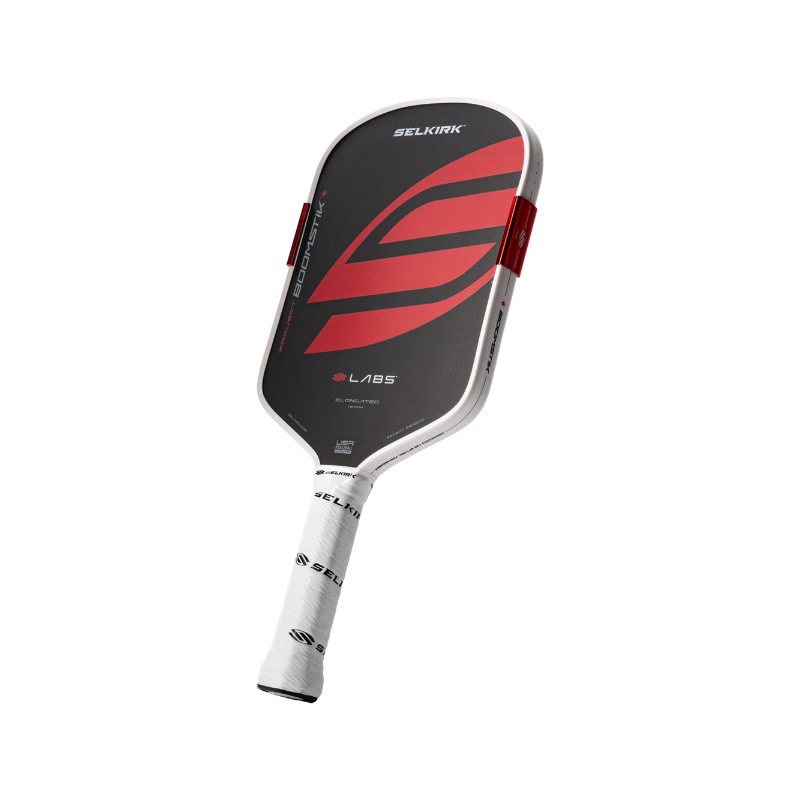
This is the most common comparison we see. The Selkirk Boomstik is a foam-core paddle with a 121 swing weight (lab-measured) — heavier than the Perseus — so it plows through drives and serves. The Perseus is quicker in hand battles and has more pop on counters. The Boomstik’s limited lifetime warranty beats JOOLA’s 6 months, but it costs more ($333 list).
- Pick the Perseus Pro IV for fast-hands doubles and speed-ups.
- Pick the Boomstik for baseline power, singles and warranty peace of mind.
Perseus vs Hyperion Pro IV (and which Pro IV is best)
JOOLA’s Pro IV range uses one core in five shapes. Testers’ takeaways:
| Pro IV shape | Profile | Best for |
|---|---|---|
| Perseus | Elongated, squared top corners, highest Pro IV swing weight | Stability and plow-through power |
| Hyperion | Elongated (16.5 × 7.5 in), curved aerodynamic head | Hand speed with long reach |
| Scorpeus | Compact/standard, 5.25 in handle | Best all-round blend of spin, control and forgiveness |
| Magnus | Elongated with larger hitting area, 5 in handle | Reach and a bigger sweet spot (one-handed players) |
| Agassi Pro | Elongated, quick handling | Fast transitions |
Which JOOLA Pro IV is best? For most players, the Scorpeus — it is the safest all-round choice. Get the Perseus if you want the most stability and power, and the Hyperion if you want a faster-swinging elongated paddle.
Who should buy the Perseus Pro IV — and who should not
Buy it if you…
- Play at 4.0 or higher and control pace
- Love to drive, speed up and counter
- Play in hot, humid places where the ball plays slower
- Are an ex-tennis player who wants an elongated paddle
Skip it if you…
- Are a beginner or low intermediate (go with the Onix Z5 or PRISM Flash)
- Win mostly with dinks and resets (try the Six Zero DBD)
- Have tennis elbow (try the Tempest Veyra)
- Need a long warranty
Best alternatives to the Perseus Pro IV
 Best for Power9.0/10
Selkirk Boomstik
Baseline bangers and singles players who want maximum depth and pace.
 Best for Spin9.1/10
11SIX24 Ultré Power 2
Topspin drivers and players who shape the ball with heavy rotation.
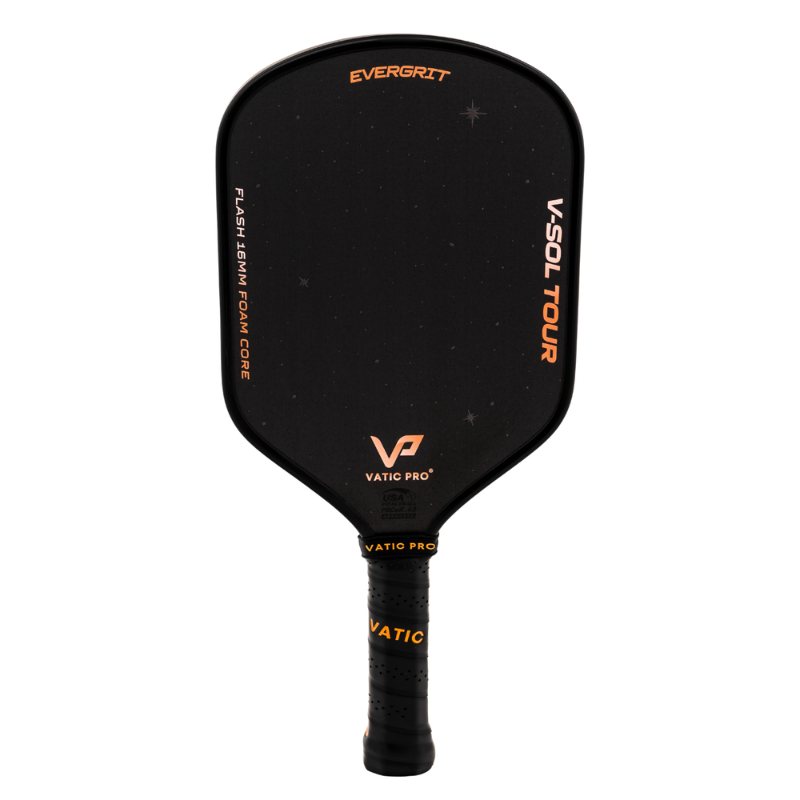 Best Value Under $1109.0/10
Vatic Pro V-Sol Tour Flash
Players who want modern Gen 4 foam performance without paying $200+.
On-court notes
Hands-on notes are coming soon. We update this section after extended play with the paddle, including photos of face wear over time.
JOOLA Perseus Pro IV FAQs
Is the JOOLA Perseus Pro IV worth it in 2026?
Which is better, the JOOLA Perseus Pro IV or the Selkirk Boomstik?
How long does the JOOLA Perseus Pro IV last?
Which JOOLA paddle is better, the Perseus or the Hyperion Pro IV?
Which JOOLA Pro IV is the best?
Is the Perseus Pro IV 14mm or 16mm better?
Is the Perseus Pro IV tournament legal?
What is the difference between the Perseus Pro IV and Pro V?

Our small independent editorial team researches paddle specs, published lab data and new releases, and writes and fact-checks every ranking, review and buying guide on this site.
Read our testing and rating method. Last updated November 19, 2026. Prices change often — tap “Check price” for today’s price.