
Best Pickleball Paddles for Beginners (2026)
Six forgiving paddles that make the game easier to learn — and won’t hold you back once you improve.
Reader-supported: when you buy through our links we may earn a commission at no extra cost to you. As an Amazon Associate we earn from qualifying purchases. Learn more.
The best pickleball paddle for beginners is the 11SIX24 Pegasus Jelly Bean (~$90). Its wide face forgives mishits, its 16mm core keeps the ball under control and its raw carbon face adds real spin. For the simplest, lightest classic paddle, get the Onix Z5 Graphite. If you learn fast and play often, the Vatic Pro V-Sol Tour Flash (~$110) will last you into intermediate play.
Your first paddle should make the game easier, not harder. That means a big sweet spot, a controlled, predictable feel and a weight that does not tire your arm. Power can come later — beginners lose far more points from mishits and popped-up dinks than from slow drives.
We built this list from published specs and independent lab measurements of swing weight, twist weight and spin. Every pick is USA Pickleball approved, and all but one cost under about $180.
Best beginner pickleball paddles at a glance
| Paddle | Best for | Shape | Weight | Swing wt | Twist wt | Core | Price range | Buy |
|---|---|---|---|---|---|---|---|---|
| 11SIX24 Pegasus Jelly Bean | Best Beginner Paddle | Widebody | 8.0–8.3 oz | 104 | 7.2 | Raw carbon + fiberglass face, foam-reinforced honeycomb | Under $100 | Check price |
| Onix Z5 Graphite | Best for True Beginners | Widebody | 7.5–8.2 oz | — | — | Graphite + Nomex | Under $100 | Check price |
| Vatic Pro PRISM Flash | Best Budget Control Paddle | Hybrid | 7.8–8.2 oz | — | — | Raw carbon + polymer honeycomb | Under $100 | Check price |
| Vatic Pro V-Sol Tour Flash | Best Value Under $110 | Hybrid | 8.0 oz | 112 | 6.57 | Gen 4 floating EPP foam | $100–$150 | Check price |
| Paddletek Tempest Veyra | Most Forgiving (Arm-Friendly) | Elongated or Widebody | 7.6–8.0 oz | 113 | 6.0 | Gen 4 EPP foam + damping rods | $150–$200 | At Paddletek |
| Friday Aura Pro | Best All-Court Value | Hybrid | 8.0 oz | 116 | 6.43 | Gen 4 dual-density foam | $150–$200 | Check price |
What makes a good beginner paddle?
Use these ranges to judge any paddle, including ones not on our list.
| Spec | Best for beginners | Why it matters |
|---|---|---|
| Shape | Widebody or hybrid | A wider face gives a bigger sweet spot, so mishits still go over the net. |
| Core thickness | 16mm | A thicker core softens contact and keeps the ball on the face longer, which means more control. |
| Twist weight | 6.5 or higher | Higher twist weight = the paddle twists less on off-center hits. |
| Static weight | 7.6–8.2 oz | Stable enough to block hard shots, light enough for long sessions. |
| Face | Carbon fiber, or textured fiberglass/graphite | A gritty face helps you add spin as your game grows. |
| Grip size | 4.125–4.25 in | Fits most adult hands; easy to build up with an overgrip. |
| Price | $60–$120 | Below this, quality drops fast; above it, you pay for features you cannot use yet. |
| Approval | USA Pickleball or UPA-A | Needed for league and tournament play. |
1. 11SIX24 Pegasus Jelly Bean — best pickleball paddle for beginners
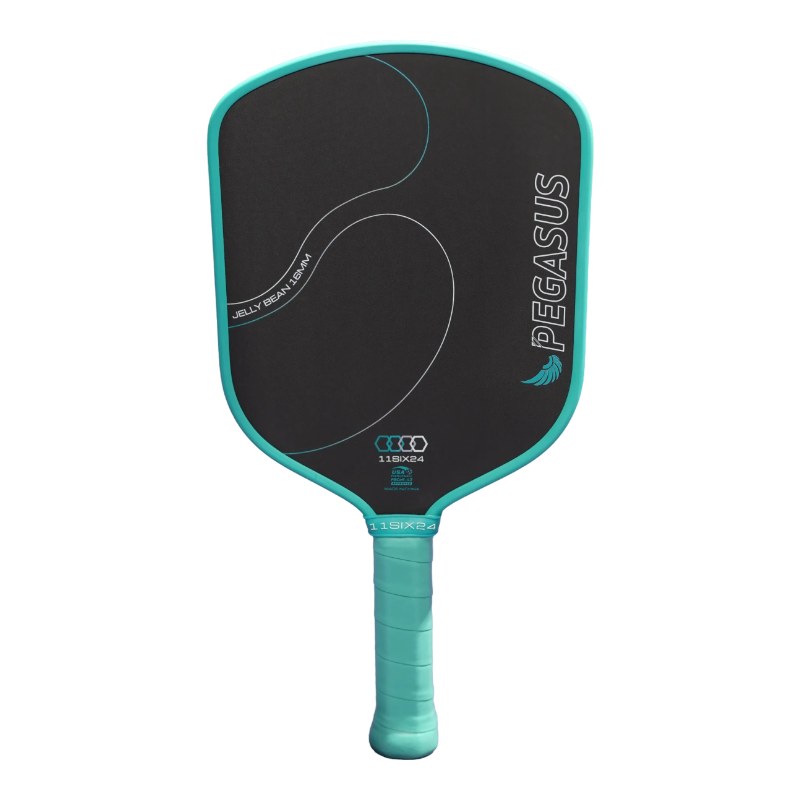 Best Beginner Paddle
11SIX24 Pegasus Jelly Bean 16mm
Why it suits beginners
The Jelly Bean feels like a paddle that costs twice as much. The widebody shape and 7.2 twist weight keep off-center hits on target, and the 16mm core makes dinks and drops easy to control. Independent lab testing measured 2,152 rpm of spin and a light 104 swing weight, so it is quick at the net and lets you start using topspin early.
Watch out for
It is a control paddle. You supply most of the pace on drives and serves. The 4.125 in grip is on the small side; add an overgrip if your hand feels cramped.
Pros
- Huge widebody sweet spot with a 7.2 twist weight
- Raw carbon face gives real spin for the price
- Long 5.75 in handle allows two-handed backhands
- Neoprene cover included
Cons
- Soft, control-first feel — not much free power
- Small 4.125 in grip; big hands may need an overgrip
- Teal color sells out often
2. Onix Z5 Graphite — best classic paddle for first-time players
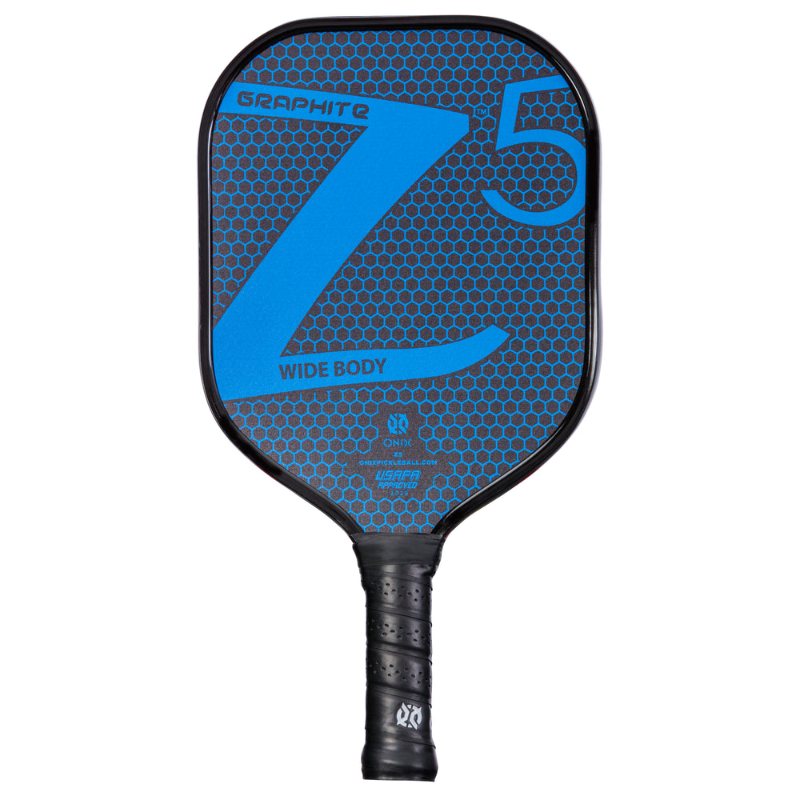 Best for True Beginners
Onix Z5 Graphite Widebody
Why it suits beginners
The Z5 has been a starter favorite for years for a reason. Its 8.125 in widebody face is one of the widest allowed, and at 7.5–8.2 oz it is easy on the arm. It is a great pick for seniors, casual weekend players and anyone who just wants a simple, durable paddle.
Watch out for
The smooth graphite face gives little spin, and the 5 in handle is too short for two-handed backhands. Once you play every week, you will likely outgrow it.
Pros
- Huge widebody sweet spot
- Light, easy to swing
- Sold almost everywhere, often on sale
Cons
- Little spin from the smooth graphite face
- Short 5-inch handle — no two-handed backhands
- Loud, older-style Nomex sound
3. Vatic Pro PRISM Flash — best control paddle for beginners under $100
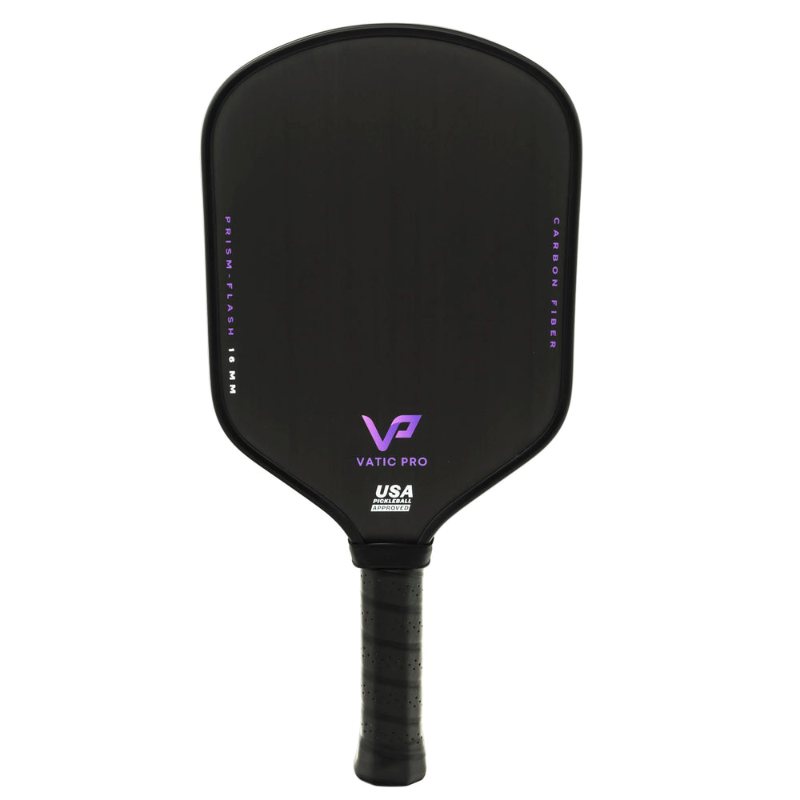 Best Budget Control Paddle
Vatic Pro PRISM Flash 16mm
Why it suits beginners
The PRISM Flash pairs a raw carbon face with a plush 16mm core, so soft shots land where you aim them. It is one of the easiest paddles to reset and dink with at this price, and its hybrid shape gives a little more reach than a widebody.
Watch out for
Power is modest. If you come from tennis and love to drive the ball, look at the V-Sol Tour Flash instead.
Pros
- Raw carbon spin and touch under $100
- Plush, soft feel for resets
- Comfortable octagonal handle
Cons
- Low power — you supply the pace
- Only one thickness (16mm)
4. Vatic Pro V-Sol Tour Flash — best for beginners who will play a lot
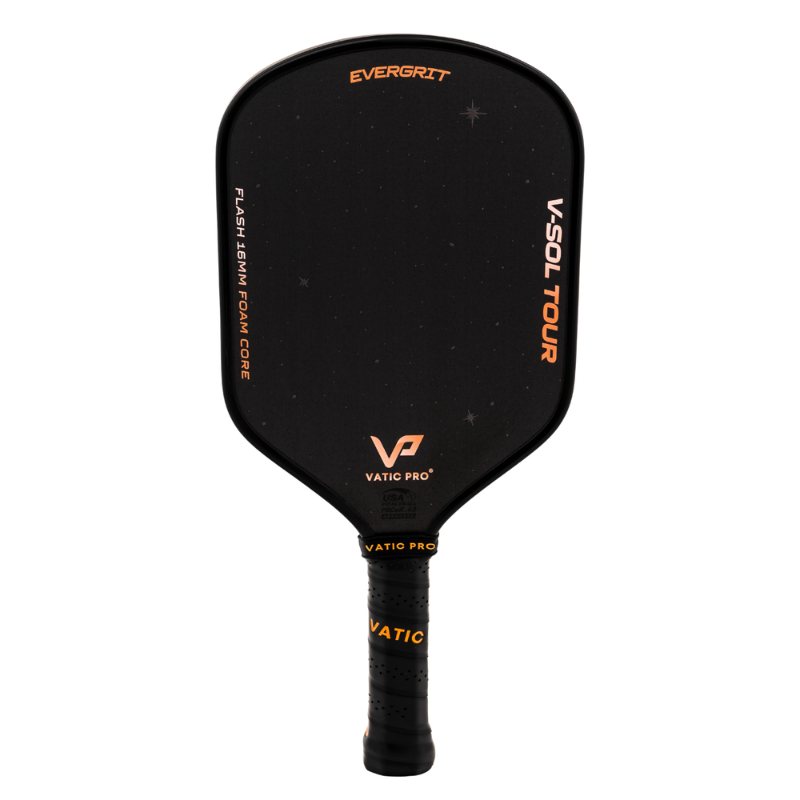 Best Value Under $110
Vatic Pro V-Sol Tour Flash 16mm
Why it suits beginners
If you already play several times a week, buy a paddle you will not outgrow in three months. The V-Sol Tour Flash gives Gen 4 foam-core performance for about $110, with a lab-measured 112 swing weight and 2,128 rpm of spin. It is forgiving enough for beginners and good enough for 3.5–4.0 play.
Watch out for
It feels firmer and livelier than the Jelly Bean or PRISM Flash, so dinks can pop up at first. Its 6.57 twist weight is fine, not huge.
Pros
- Foam-core power at about half the usual price
- Durable grit holds spin longer
- Average swing weight feels quick
Cons
- Stiff, firm feel at impact
- Stock twist weight is only average
- Fewer pro-level fit-and-finish touches
5. Paddletek Tempest Veyra — best for seniors and sore arms
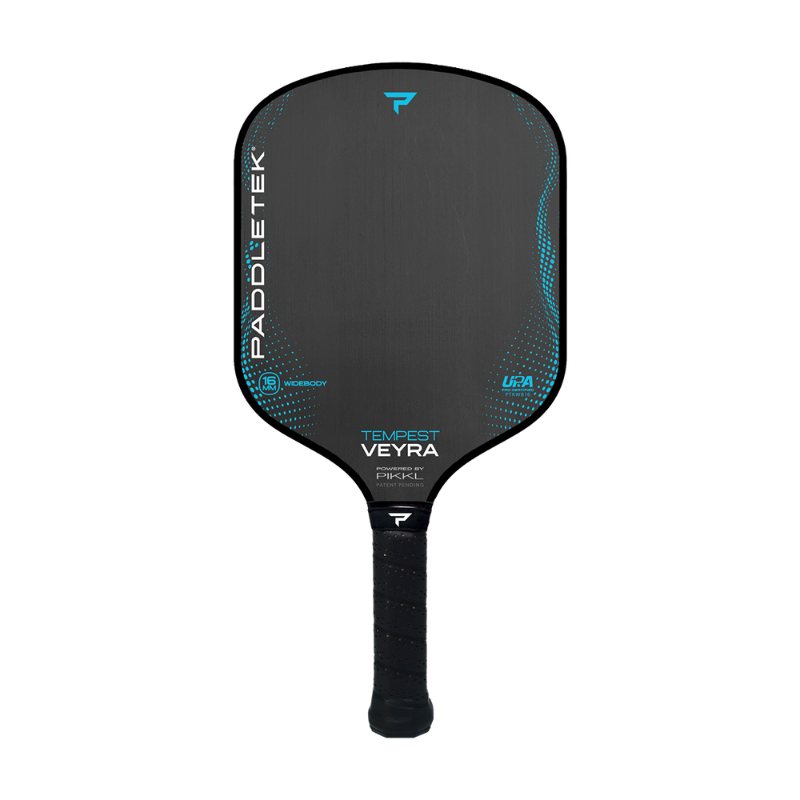 Most Forgiving (Arm-Friendly)
Paddletek Tempest Veyra 16mm (Elongated / Widebody)
Why it suits beginners
Many new players pick up pickleball later in life or come back from elbow and shoulder problems. The Veyra’s EPP foam core with two vibration-damping rods takes the sting out of hard hits. The widebody version is quick in the hands and very forgiving.
Watch out for
At about $180 it costs more than other beginner paddles, and it is not built for big power. It is worth it if comfort is your top priority.
Pros
- Damping rods cut vibration for sore arms
- Extra-large, forgiving sweet spot
- Widebody version is very quick (108 swing weight)
Cons
- Modest top-end power
- Light stock weight may need lead tape for stability
6. Friday Aura Pro — best upgrade-ready paddle for beginners
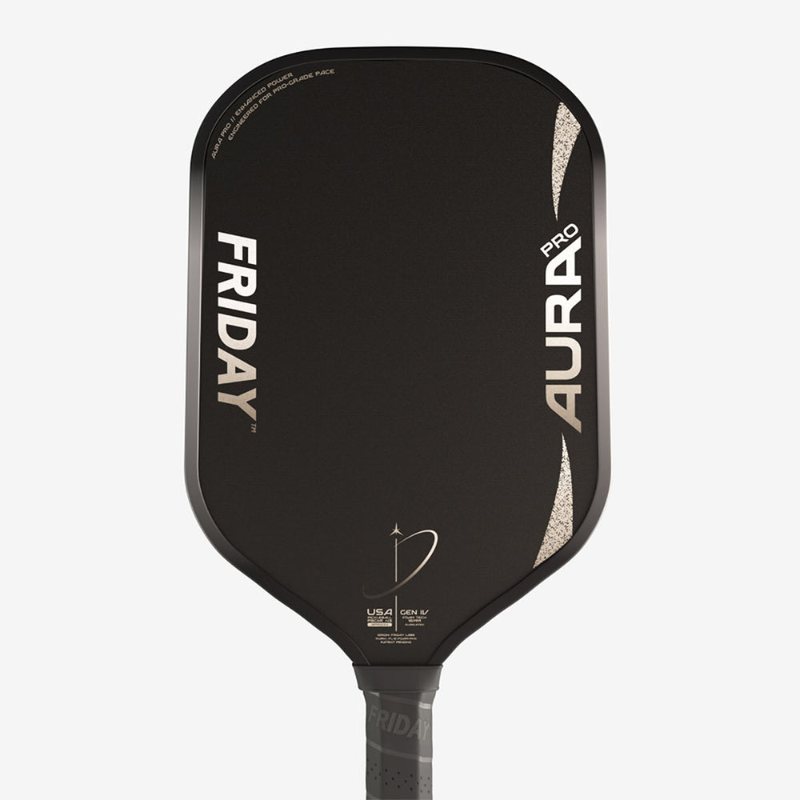 Best All-Court Value
Friday Aura Pro Hybrid 16mm
Why it suits beginners
If your budget allows about $170, the Aura Pro gives you a 16mm dual-density foam core with easy pop, a raw carbon face and three shapes to choose from. Pick the widebody for forgiveness or the hybrid if you want one paddle from beginner to 4.0.
Watch out for
The warranty is only 6 months, and the hybrid’s twist weight is average. True beginners will get more forgiveness per dollar from the Jelly Bean.
Pros
- Polymer-like pop from a foam core
- Three shapes (elongated, hybrid, widebody)
- Priced below most Gen 4 rivals
Cons
- 6-month warranty
- Hybrid's stock twist weight is only average
Which beginner paddle is right for you?
| If you are… | Best pick | Why |
|---|---|---|
| A complete beginner | 11SIX24 Pegasus Jelly Bean | Forgiving, spin-friendly and cheap enough to start. |
| A senior or casual player | Onix Z5 Graphite | Light, simple and very wide. |
| Dealing with elbow or shoulder pain | Paddletek Tempest Veyra | Damping rods and EPP foam cut vibration. |
| A former tennis player | Vatic Pro V-Sol Tour Flash | Longer hybrid shape and more pop on drives. |
| Focused on dinks and soft play | Vatic Pro PRISM Flash | Plush, controlled feel at the kitchen line. |
| Planning to play 3+ times a week | Friday Aura Pro | Gen 4 foam performance you will not outgrow quickly. |
How much should you spend on your first paddle?
| Budget | What you get | Our advice |
|---|---|---|
| Under $50 | Wood, smooth fiberglass or 2-paddle sets with thin cores | Fine for trying the game or for family sets. Expect little spin and a small sweet spot. |
| $50–$100 | Graphite and raw carbon paddles with 16mm cores | The best value for most beginners. Start here. |
| $100–$150 | Gen 4 foam cores, durable grit faces | Worth it if you already play every week. |
| $150 and up | Premium foam cores and thermoformed builds | Only for comfort needs (sore arms) or fast learners. |
Prices change often, so we show price ranges in our tables. Tap “Check price” for today’s price.
5 mistakes beginners make when buying a paddle
- Buying a pro’s power paddle. Elongated, power-focused paddles have small sweet spots and punish mishits.
- Going too light. Very light paddles feel fast in the store but twist on off-center hits and send balls long.
- Picking a grip that is too big. A big grip locks your wrist. You can always build a small grip up with an overgrip.
- Ignoring approval. Check for a USA Pickleball or UPA-A approval before you buy if you plan to join leagues.
- Buying the cheapest set for serious play. A $30 set is fine for a backyard game, but a $90 paddle will help you learn much faster.
When should a beginner upgrade?
Upgrade when you play at least twice a week, can keep a rally going and want more spin, control or power. Most players reach that point within 3–6 months. When you are ready, see our picks for the best pickleball paddles for intermediate players, compare every number in the paddle specs database, or follow our step-by-step guide to choosing a paddle.
Beginner paddle FAQs
What is the best pickleball paddle for beginners?
What type of paddle should a beginner use?
Should a beginner buy a carbon fiber paddle?
Is a heavier or lighter paddle better for beginners?
How much should a beginner spend on a pickleball paddle?
Are wood pickleball paddles OK for beginners?
What grip size should a beginner choose?
Should beginners buy a pickleball paddle set?
How do I know when to upgrade my beginner paddle?

Our small independent editorial team researches paddle specs, published lab data and new releases, and writes and fact-checks every ranking, review and buying guide on this site.
Read our testing and rating method. Last updated November 19, 2026. Prices change often — tap “Check price” for today’s price.