
How to Choose a Pickleball Paddle: The 7-Step Guide
Pick the right paddle the first time. A plain-English guide to weight, thickness, shape, grip, core, face and budget — with a quick decision table.
Reader-supported: when you buy through our links we may earn a commission at no extra cost to you. As an Amazon Associate we earn from qualifying purchases. Learn more.
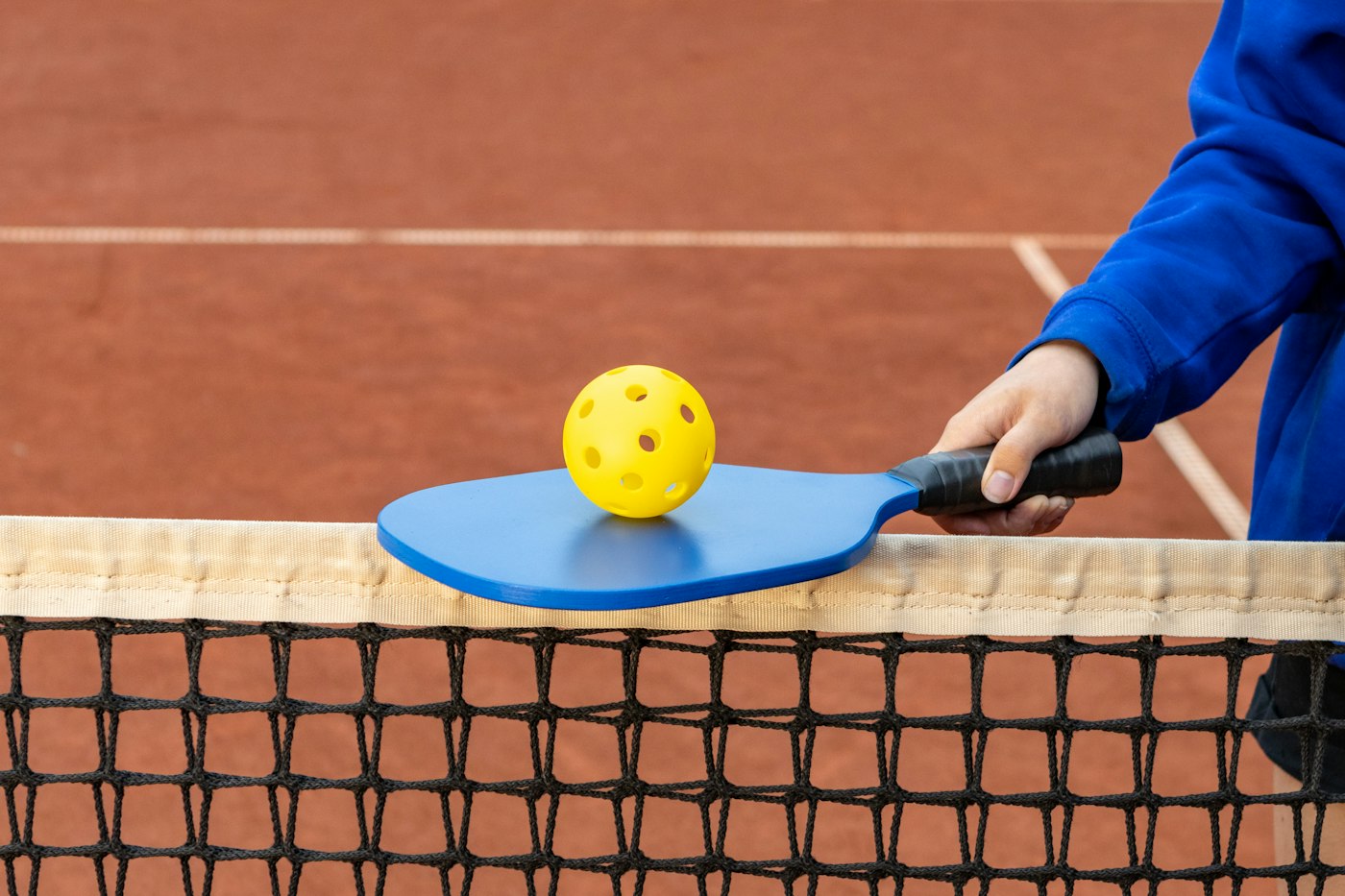
To choose a pickleball paddle, pick your style (power, control or all-court), then choose a 16mm core, a hybrid or widebody shape, a 7.8–8.2 oz weight, the right grip size (most adults: 4.125–4.25 in) and a carbon fiber face. For most players that means a $100–$200 foam-core paddle like the Six Zero Coral or Vatic Pro V-Sol Tour.
There is no single best pickleball paddle — there is the best paddle for you. Two players at the same level can need very different paddles. This guide gives you the seven decisions that matter, in order, and tells you which paddles fit each answer.
The 30-second decision table
| Question | If you answer… | Choose |
|---|---|---|
| How long have you played? | Under 6 months | Widebody, 16mm, 7.5–8.0 oz, under $100 |
| 6 months+, 2x a week | Hybrid, 16mm, carbon face, $100–$200 | |
| How do you win points? | Dinks, drops, resets | Control paddle (16mm honeycomb or soft foam) |
| Drives, speed-ups | Power paddle (elongated, foam or thermoformed) | |
| Do you use a two-handed backhand? | Yes | Handle 5.5 in or longer |
| Any arm or elbow pain? | Yes | Soft foam core, swing weight 108–114, high twist weight |
| Do you play sanctioned events? | Yes | Check USA Pickleball and/or UPA-A approval |
Step 1: Choose your play style — power, control or all-court
Power paddles help you drive, serve deep and finish points. They are usually elongated with a livelier core. The cost: dinks and resets are harder to keep low. Example: Selkirk Boomstik.
Control paddles absorb pace so you can drop, dink and reset with less effort. You supply the power. Example: Six Zero Double Black Diamond.
All-court paddles balance both. If you are unsure, start here. Example: Six Zero Coral.
Step 2: Pick core thickness — 14mm or 16mm
Core thickness changes how long the ball stays on the face (dwell time).
- 16mm: softer, more control, bigger sweet spot. Best for most players.
- 14mm: crisper, more pop, faster hands. Best for strong 4.0+ players.
- Under 13mm: very poppy and fast; mostly for advanced hand-battle players.
Step 3: Match the shape to your game
| Shape | Typical size | Pros | Cons | Best for |
|---|---|---|---|---|
| Widebody | ≈16 × 8 in | Biggest sweet spot, quickest | Less reach and leverage | Beginners, seniors, hand battles |
| Hybrid | ≈16.3 × 7.7 in | Balance of reach and forgiveness | Jack of all trades | Most players |
| Elongated | ≈16.5 × 7.5 in | Reach, spin, power | Smaller sweet spot, slower hands | Ex-tennis players, singles, bangers |
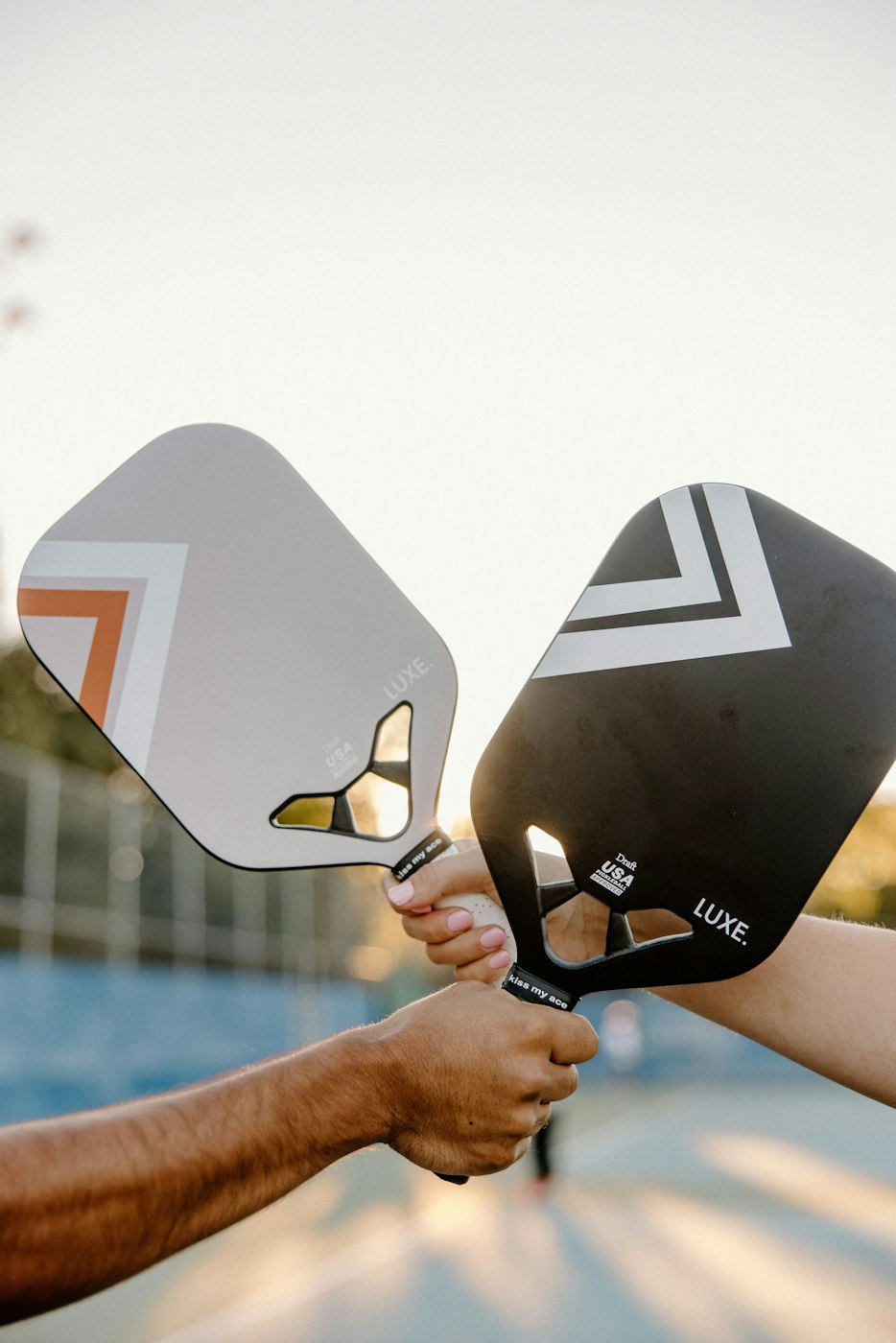
Step 4: Get the weight right (and check swing weight)
- Light (7.3–7.8 oz): fast hands, easier on the arm, less stable.
- Mid (7.8–8.2 oz): the sweet spot for most players.
- Heavy (8.2–8.5+ oz): more power and stability, slower at the net.
Static weight is only half the story. Swing weight tells you how heavy it feels in motion: under 110 is quick, 112–118 is average, 120+ is heavy. Compare real numbers in our paddle specs database.
Step 5: Find your grip size and handle length
How to measure grip size
- Open your hitting hand, fingers together.
- Measure from the middle crease of your palm to the tip of your ring finger.
- Under 4.25 in → 4.0–4.125 in grip. 4.25 in or more → 4.25 in grip.
Between sizes? Go smaller. You can build a grip up with an overgrip, but you cannot shave one down.
Handle length
Choose 5.5 in or longer for two-handed backhands. Short handles (5.0–5.25 in) give a larger face for the same paddle length.
Step 6: Choose core and face materials
Core
- Foam (EPP/EVA, “Gen 4”): pop plus a soft feel; resists core crush. The 2026 favorite.
- Polypropylene honeycomb: classic control and quiet sound.
- Nomex: harder, louder, poppy — mostly on budget and older paddles.
Face
- Raw carbon fiber (T700): best spin and touch.
- Textured/infused grit (HexGrit, EverGrit, Diamond Tough): longer-lasting spin.
- Fiberglass: more pop, less spin, cheaper.
- Graphite: light and crisp, but smooth.
Full breakdown: what is the best pickleball paddle material?
Step 7: Set your budget
| Budget | What you get | Our pick |
|---|---|---|
| Under $60 | Fiberglass or graphite starter paddles and sets | Fine for trying the sport |
| $60–$100 | Raw carbon faces, honeycomb cores | Vatic Pro PRISM Flash, Onix Z5 |
| $100–$150 | Gen 4 foam cores with durable grit | Vatic Pro V-Sol Tour Flash |
| $150–$220 | Refined feel, better QC, more shapes | Six Zero Coral, 11SIX24 Ultré |
| $220+ | Pro-level power and tech, longer warranties | JOOLA Perseus Pro IV, Selkirk Boomstik |
5 mistakes to avoid when buying a paddle
- Buying a pro’s paddle. Pros customize weight and play a different game.
- Going too powerful too soon. Power magnifies errors at the kitchen.
- Ignoring grip size. The wrong grip causes squeezing and arm pain.
- Chasing spin numbers across labs. Compare spin only within one lab’s data.
- Skipping the approval check. Tournament players need a USAP and/or UPA-A approved paddle.
How to try paddles before you buy
- Borrow paddles at your club and hit 10 minutes of dinks, drops and drives with each.
- Ask local pro shops and big retailers about demo programs.
- Buy from sellers with clear return windows, and test indoors first if returns require “like new” condition.
Paddle buying FAQs
Do I want a 14mm or 16mm pickleball paddle?
How do I know if I am a 3.5 pickleball player?
Is there actually a difference in pickleball paddles?
How can I try pickleball paddles before buying?
What weight pickleball paddle is best?
What grip size do I need?
What is the best paddle shape for beginners?
How much should a good pickleball paddle cost?
Ready to buy? See the 10 best pickleball paddles of 2026 or the best paddles for intermediate players.

Our small independent editorial team researches paddle specs, published lab data and new releases, and writes and fact-checks every ranking, review and buying guide on this site.
Read our testing and rating method. Last updated November 19, 2026. Prices change often — tap “Check price” for today’s price.